
When people see a hot-dip galvanized scissor lift, they often focus on the finished zinc coating. However, one of the most important steps actually happens before the lift ever reaches the galvanizing bath.
This article explains why vent and drainage holes are necessary and how they contribute to the quality and durability of a galvanized scissor lift.
The Project
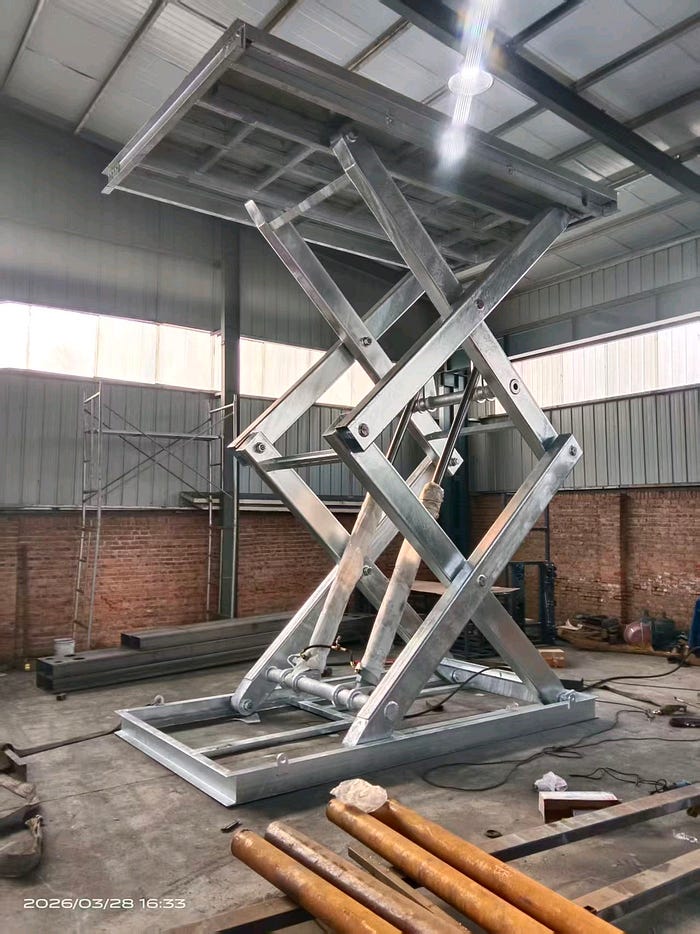
The lift shown here is a custom hydraulic scissor lift with:
- 5 Ton Capacity
- 4m × 2.5m Platform
- Full Hot-Dip Galvanized Structure
Designed for outdoor operation, the lift requires long-term protection against corrosion.
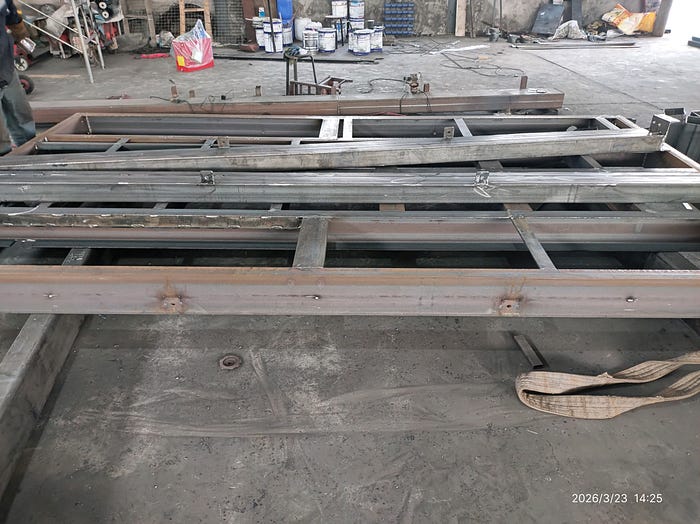
Manufacturing Begins With Welding
The production process starts with fabrication and welding of the platform, base frame, and scissor arms.
Heavy-duty steel components are cut, aligned, and welded to create the complete structure.
At this stage, many of the steel members are hollow sections.
Why Are Holes Added Before Galvanizing?
Hot-dip galvanizing works by immersing steel into molten zinc at high temperature.
If hollow sections are completely sealed, several problems can occur:
1. Air Cannot Escape
Trapped air prevents molten zinc from entering enclosed sections.
As a result, internal surfaces may remain unprotected.
2. Zinc Cannot Flow Properly
Without adequate openings, zinc cannot circulate throughout the structure.
This may lead to uneven coating thickness and incomplete coverage.
3. Pressure Can Build Up
During the galvanizing process, trapped air expands because of the high temperature.
Proper vent holes help eliminate this risk.
4. Drainage Is Necessary
After the lift is removed from the zinc bath, excess zinc must be able to drain away efficiently.
Drainage holes help create a cleaner and more uniform finish.
The Galvanizing Process
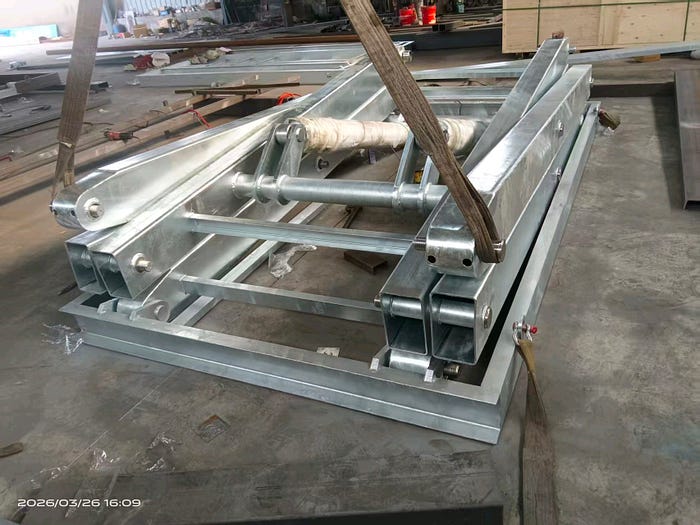
After drilling and inspection, the entire structure is sent for hot-dip galvanizing.
Molten zinc coats both internal and external surfaces, creating a protective barrier that helps prevent rust and corrosion.
This protection is especially valuable for equipment exposed to rain, humidity, or industrial environments.
Final Assembly and Testing
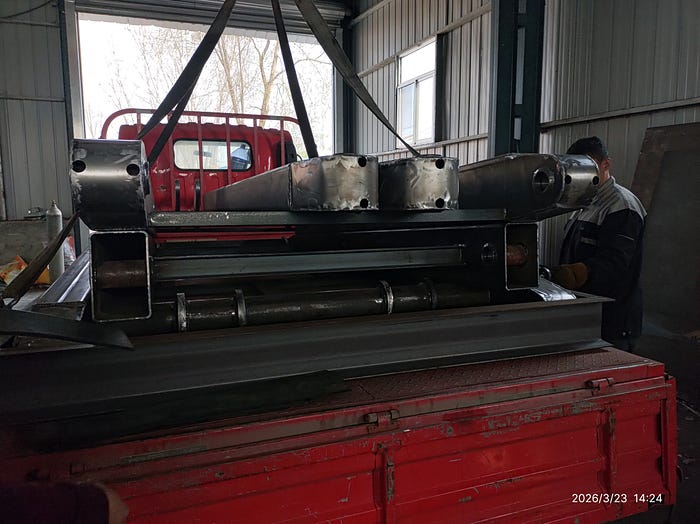
After galvanizing, the structure returns to the factory for assembly.
Hydraulic cylinders, pins, hydraulic hoses, electrical controls, and safety components are installed.
For lifts equipped with advanced control systems, a PLC status screen can significantly simplify installation and on-site troubleshooting — learn how it works here.
The completed lift then undergoes testing and commissioning to ensure reliable operation before delivery.
A Small Detail That Makes a Big Difference
Vent and drainage holes may seem like a minor manufacturing detail, but they play a critical role in achieving a successful galvanizing result.
Without these openings, even the best galvanizing process cannot fully protect the structure.
For outdoor scissor lifts, proper galvanizing preparation is just as important as the galvanizing itself.
Sometimes the durability of a product depends on the details that most people never notice.
📩 Want to Learn More?
If you're exploring ways to improve loading efficiency, feel free to reach out or connect.
If you're interested in a similar heavy-duty outdoor scissor lift, you can view our 5-Ton Twin Structure Scissor Lift for full specifications and enquiry options.
📩 WhatsApp: Beacon Industries
Company: BEACON INDUSTRIES LTD
Google Business Profile: Click here
We support global inquiries and OEM customization.
0 comments